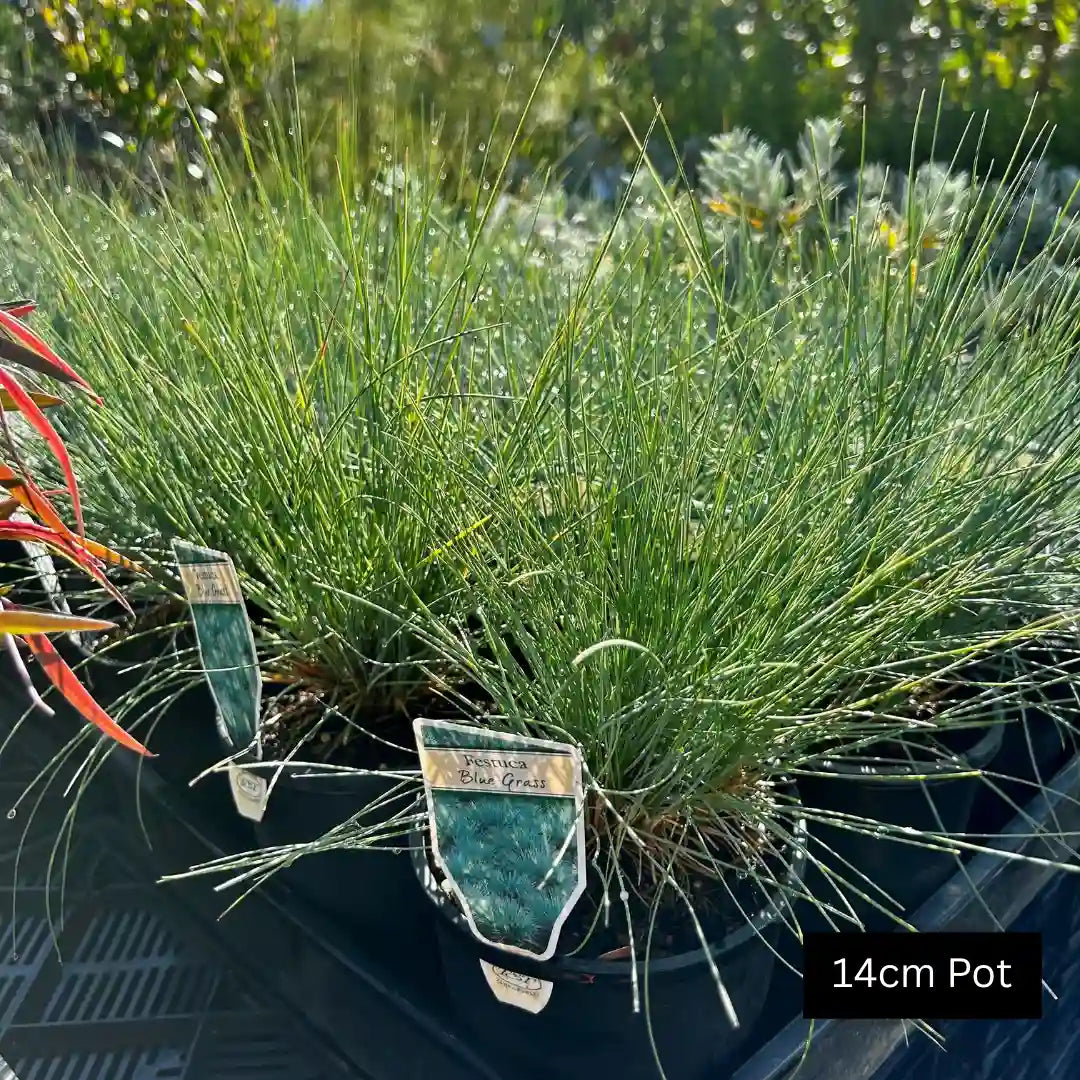


Festuca glauca (Blue Fescue Grass) is a compact ornamental grass loved for its striking blue-grey foliage and naturally tidy mound shape. It adds contrast and texture to garden beds, borders and pots, working beautifully alongside flowering perennials, succulents or structured plantings.
Tough, low maintenance and drought tolerant once established, it prefers a sunny spot with good drainage, providing a contrasting colour to gardens through out the year.
Product Specifications
-
Common Name: Blue Fescue Grass
- Botanical Name: Festuca Glauca
-
Mature Height: Up to 30cm
-
Mature Width: Up to 30cm
-
Form: Ground covering, grass, clumping
- Foliage: Silvery green blue foliage
- Uses: Underplanting, garden borders, garden layering
- Flowering: Yes, pointed flower
- Flowering Period: Late summer
- Sun: Full Sun, Partial Shade
-
Maintenance: Low, prune yearly for neater finish
-
Water Requirement: Low once established
- Planter Suitability: Yes
- Australian Native: No
Commonly Asked Questions
Do I need to prune Blue Fescue?
Very little pruning is needed. Simply remove any dry, tired or older foliage every so often to keep the plant looking fresh. A light tidy-up once or twice a year is usually enough.
Will it stay blue throughout the year?
Yes, it generally holds its blue-grey colour year-round, particularly when grown in full sun. In very hot weather or heavier shade the colour may soften slightly, but it still maintains its silvery tone. Love blue foliage?
Take a look at Chalk Sticks.
How far apart should I plant for a garden border?
For a full, even border, plant about 25–35cm apart. This spacing allows each plant to develop its natural rounded shape while filling in nicely over time.
Does Blue Fescue flower?
Yes, it produces fine, airy flower spikes in late spring to summer. They start bluish-green and often fade to a soft straw colour. Many people grow it mainly for the foliage, but the flowers add light texture and movement.
When is the best time to prune Blue Fescue?
The best time to tidy Blue Fescue is just before fresh new growth starts. Simply remove any older or dry foliage to keep the plant neat and encourage healthy new shoots. Avoid heavy pruning, as it naturally keeps a compact, rounded shape.